


 Deutsch
 English
 Español
 Français
 Nederlands
 Português


 Share
Share




China rare earth controls 2026 escalated sharply between October 2025 and March 2026, when Beijing imposed sweeping export licensing requirements on seven rare earth elements. The move triggered price spikes of up to sixfold outside China and exposed critical vulnerabilities in Western defense, electric vehicle (EV), and renewable energy supply chains. With China controlling roughly 90% of global rare earth processing, the United States launched FORGE (Forum on Resource Geostrategic Engagement) and Project Vault, a $12 billion strategic reserve, while signing 21 bilateral minerals deals in five months.
What Are China's 2026 Rare Earth Export Controls?
China's new licensing regime covers seven elements—neodymium, praseodymium, dysprosium, samarium, gadolinium, terbium, and lutetium—used in permanent magnets, missile guidance systems, and wind turbines. Under the non-automatic licensing system, exporters must obtain approval from the Ministry of Commerce (MOFCOM). European firms have seen licensing approval rates fall below 25%, effectively creating de facto quantitative restrictions. According to Informed Clearly, prices for neodymium, praseodymium, and dysprosium surged sixfold outside China.
This escalation builds on earlier controls from August 2023 through October 2025. The rare earth supply chain now faces a strategic inflection point as China weaponizes processing capacity rather than raw scarcity.
How the Controls Are Reshaping Global Supply Chains
Defense and Military Impacts
Rare earth elements are essential for F-35 fighter jets, missile guidance systems, and advanced radar. The Pentagon has acknowledged a $2.41 billion shortfall across 69 critical materials. The U.S. defense industrial base remains highly import-dependent, with no domestic heavy rare earth separation capacity. As China restricts exports to U.S. defense companies, analysts warn that military production lines could face bottlenecks within months.
EV and Renewable Energy Disruptions
Electric vehicle motors require neodymium-based magnets, adding an estimated $500 per vehicle. Wind turbines rely on dysprosium to withstand high temperatures. The European EV supply chain is particularly exposed, with over 80% of European companies dependent on Chinese minerals. Price spikes are already squeezing margins across the renewable energy sector.
Western Countermeasures: FORGE and Project Vault
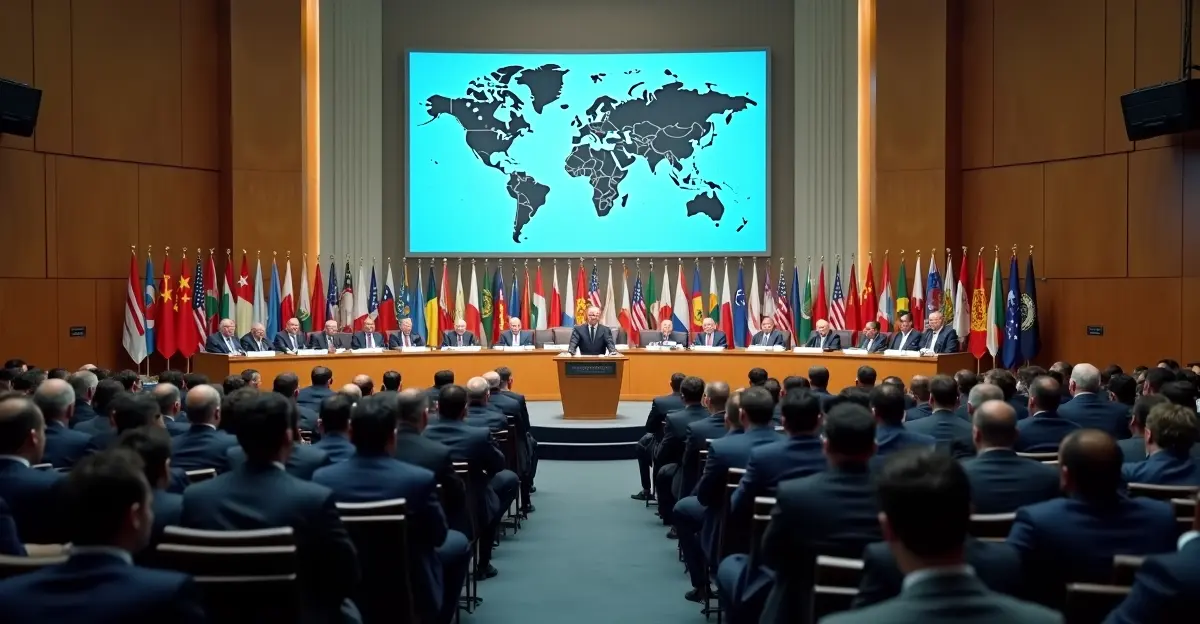
In February 2026, the United States hosted the Critical Minerals Ministerial with 54 countries and the European Commission. Washington launched FORGE, a successor to the Minerals Security Partnership chaired by the Republic of Korea, to coordinate price floors and adjustable tariffs. Simultaneously, Project Vault—a $12 billion public-private strategic reserve backed by a $10 billion EXIM loan and nearly $2 billion in private capital—aims to stockpile minerals and let companies lock in fixed purchase rates. Boeing and General Motors have expressed support.
The U.S. also signed 11 new bilateral frameworks or MOUs, bringing the total to 21 in five months, and reported over $30 billion in letters of interest, investments, and loans. According to the U.S. State Department, these moves aim to build secure, diversified, resilient supply chains. The EU critical minerals strategy has responded with RESourceEU and 47 strategic projects.
The 12-to-18 Month Window: Why Time Is Running Out
Despite Western efforts, China still controls about 90% of rare earth processing and 94% of permanent magnet output. A 2026 Griffith Asia Institute study found that rebuilding independent processing capacity could take 20–30 years. Analysts warn the geopolitical window for action may close within 12 to 18 months. 'Time favors China,' noted one report from Rare Earth Exchanges. 'The longer Western investment is delayed, the harder it becomes to break dependence.'
Comparison of rare earth processing capacity:
| Indicator | China | United States | European Union |
|---|---|---|---|
| Mining share | ~70% | ~15% | <1% |
| Processing/refining | ~90% | <5% | <5% |
| Permanent magnet output | 94% | ~2% | ~1% |
The rare earth geopolitics landscape is shifting rapidly as the IMF flags mineral supply weaponization as a major growth risk.
FAQ: China Rare Earth Controls 2026
What are the seven rare earth elements under China's 2026 export controls?
Neodymium, praseodymium, dysprosium, samarium, gadolinium, terbium, and lutetium.
Why did rare earth prices spike sixfold?
China's non-automatic licensing regime cut approval rates for European firms below 25%, creating de facto export restrictions.
What is Project Vault?
A $12 billion U.S. strategic minerals reserve backed by a $10 billion EXIM loan and private capital, allowing companies to lock in fixed prices.
How much of global rare earth processing does China control?
About 90%, along with 94% of permanent magnet output.
How long does the West have to build independent supply chains?
Analysts warn of a 12-to-18 month window; rebuilding full capacity could take 20–30 years.
Conclusion: A Reckoning for Western Industry
China's 2026 export controls have transformed rare earths from a niche trade dispute into a full-blown strategic crisis. FORGE and Project Vault mark an unprecedented Western response, but the fundamental imbalance in processing capacity remains. The next 12 to 18 months will determine whether defense, EV, and renewable energy sectors can diversify—or face continued vulnerability to Beijing's leverage.



Follow Discussion